Imagine winning the lottery and having the freedom to live anywhere you wanted without financial restrictions. Would you choose a neighborhood with shopping malls and multiple supermarkets within a one-mile radius? Would you prefer living downtown, surrounded by restaurants, grocery stores, and vibrant nightlife? Or would you find yourself living in a food desert, without access to a personal vehicle, relying on public transportation, and struggling to find fresh fruits and vegetables?
Unfortunately, the third scenario is a reality for many low-income communities across the United States. Access to healthy, affordable food is not always a matter of personal choice. For families living in underserved neighborhoods, transportation barriers, limited grocery store options, and rising food prices can make purchasing nutritious food a daily challenge. Farmers’ markets can help address these challenges by bringing fresh, locally grown produce directly into communities. In this blog post, we’ll explore what food deserts are, how limited access to nutritious food affects low-income communities, and how farmers’ markets help improve access to fresh fruits and vegetables.
What Are Food Deserts and How Do They Affect Low-Income Communities?
Food deserts are commonly described as areas where residents have limited access to affordable, nutritious foods, particularly fresh fruits and vegetables. These communities may lack nearby grocery stores, supermarkets, and other retailers that offer healthy food options. Consider this example: If the nearest grocery store is approximately 3.2 miles away, your transportation options can significantly affect how easily you access fresh food.
- Driving: If you own a car, the trip might take approximately 12 minutes.
- Public transportation: Without a vehicle, the journey could take 25 to 40 minutes, depending on traffic and transit schedules.
- Walking: If you have limited money for transportation, walking could take approximately 1 hour and 30 minutes.
Now imagine having a grocery store within one mile of your home. Walking to the store would take approximately 24 minutes, making access to groceries considerably easier. For individuals living in low-income neighborhoods, these transportation challenges can influence what foods they purchase, how frequently they shop, and whether they can afford fresh produce. Income and transportation access play significant roles in determining whether families can consistently obtain healthy, nutritious food.
…an individual’s food shopping trip may require taking several buses or trains. In suburban and rural areas, public transportation is either very limited or unavailable, with supermarkets often many miles away from people’s homes.
— Food Empowerment Project
How Limited Access to Healthy Food Affects Community Health
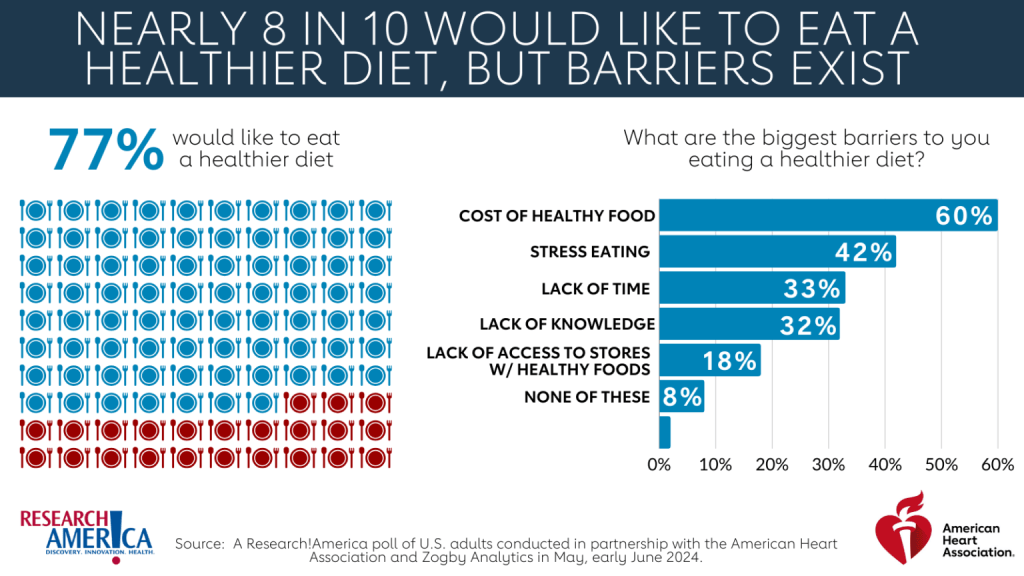
When access to fresh fruits and vegetables is limited, families may have fewer opportunities to incorporate nutritious foods into their daily meals. According to a 2024 Research!America survey, 21% of respondents reported that they or someone close to them had experienced persistent hunger during the previous year. Nearly half (46%) said it was at least somewhat difficult to regularly obtain and eat nutritious foods. Additionally, 54% agreed that the United States is not making enough progress toward making nutritious food accessible and affordable. Rising food prices and inflation can make these challenges even more difficult for low-income households. Highly processed foods are often less expensive and more convenient because they can be mass-produced using relatively inexpensive ingredients.
Although purchasing inexpensive processed foods may seem like a practical short-term solution, consistently consuming a diet low in essential vitamins, minerals, and fiber can negatively affect long-term health. Poor nutrition is associated with an increased risk of chronic diseases and other diet-related health conditions. Having access to affordable, nutritious food is essential for maintaining overall health and supporting healthier communities.
How Farmers’ Markets Improve Access to Fresh Fruits and Vegetables
Farmers’ markets play an important role in improving access to fresh produce, particularly in underserved and low-income neighborhoods. By connecting local farmers directly with consumers, these markets create opportunities for residents to purchase seasonal fruits, vegetables, and other farm-fresh products. Unlike traditional grocery shopping, farmers’ markets allow consumers to interact directly with the people who grow their food. Shoppers can ask questions about farming practices, pesticide use, animal welfare, and sustainable agriculture. Farmers’ markets also introduce shoppers to seasonal produce and unique heirloom varieties that may not be readily available in conventional supermarkets. This gives families an opportunity to explore different fruits and vegetables while incorporating more variety into their diets. By bringing fresh produce closer to underserved communities, farmers’ markets can help reduce some of the transportation barriers that prevent residents from accessing nutritious food.
Supporting Local Farmers and Strengthening Communities
The benefits of farmers’ markets extend beyond improving access to healthy food. Shopping at local farmers’ markets also supports small businesses, independent farmers, and the local economy. When consumers purchase directly from farmers, more of their money goes toward supporting the people who grow their food. These purchases help farmers maintain their businesses, create local economic opportunities, and contribute to the growth of agricultural communities. Farmers’ markets also provide welcoming spaces where farmers, artisans, and consumers can connect. These interactions help strengthen neighborhood relationships, encourage community engagement, and create a greater appreciation for locally grown food. Consumers can also make environmentally conscious choices when shopping at farmers’ markets. Bringing reusable shopping bags, for example, helps reduce the need for disposable packaging. Purchasing locally grown seasonal produce can also support a more community-centered food system.
Why Shopping at Farmers’ Markets Is Good for Your Health
One of the greatest benefits of visiting farmers’ markets is the opportunity to enjoy fresh, seasonal, and nutrient-rich foods. Fresh fruits and vegetables provide essential vitamins, minerals, fiber, and antioxidants that support overall health and well-being. Incorporating a variety of colorful produce into your meals can help promote a balanced diet and healthier eating habits. Another advantage of shopping at farmers’ markets is the opportunity to build relationships with local growers. Having conversations with the people who bring food from their farms to your table allows you to ask questions about how your food is grown and processed. For example, you can ask farmers whether they use pesticides or synthetic fertilizers, how they manage their crops, and whether packaged products contain additives or preservatives. Keep in mind that growing practices vary by farm, so asking questions is one of the best ways to make informed purchasing decisions.
Farmers’ markets also offer an opportunity to discover unique produce varieties that may be difficult to find in traditional supermarkets. From colorful heirloom tomatoes to seasonal fruits and locally grown vegetables, there is always something new to explore. Nothing compares to purchasing fresh, vibrant produce while knowing where your food comes from and who helped grow it. This directory offers a way to acquire information on farmers market listings. This includes details such as market locations, operating hours, directions, available products, accepted payment methods, and additional information for consumers.
Final Thoughts: Farmers’ Markets Help Build Healthier Communities
Access to fresh, affordable, and nutritious food should not depend on where someone lives or how much money they earn. Yet, food insecurity and limited grocery access continue to affect many low-income communities. Farmers’ markets offer one meaningful way to help address these challenges by bringing fresh fruits and vegetables closer to residents while supporting local farmers and strengthening community connections.
Whether you’re looking to improve your eating habits, support small businesses, discover seasonal produce, or make more sustainable food choices, visiting a farmers’ market is a great place to start. The next time you visit a farmers’ market, take a moment to connect with the farmers, explore unfamiliar produce, and learn more about where your food comes from. You may discover that shopping locally is about more than purchasing fresh food—it’s about investing in healthier people, stronger communities, and a more sustainable food system.
References
Food Empowerment Project. (n.d.). Food deserts. https://foodispower.org/access-health/food-deserts/
Lanier, J., & Schumacher, J. (2016, November 30). A multiple perspective view of a farmer’s market gleaning program on Fruit and vegetable access in a food desert. Health Educator. https://eric.ed.gov/?id=EJ1196201


Leave a Reply